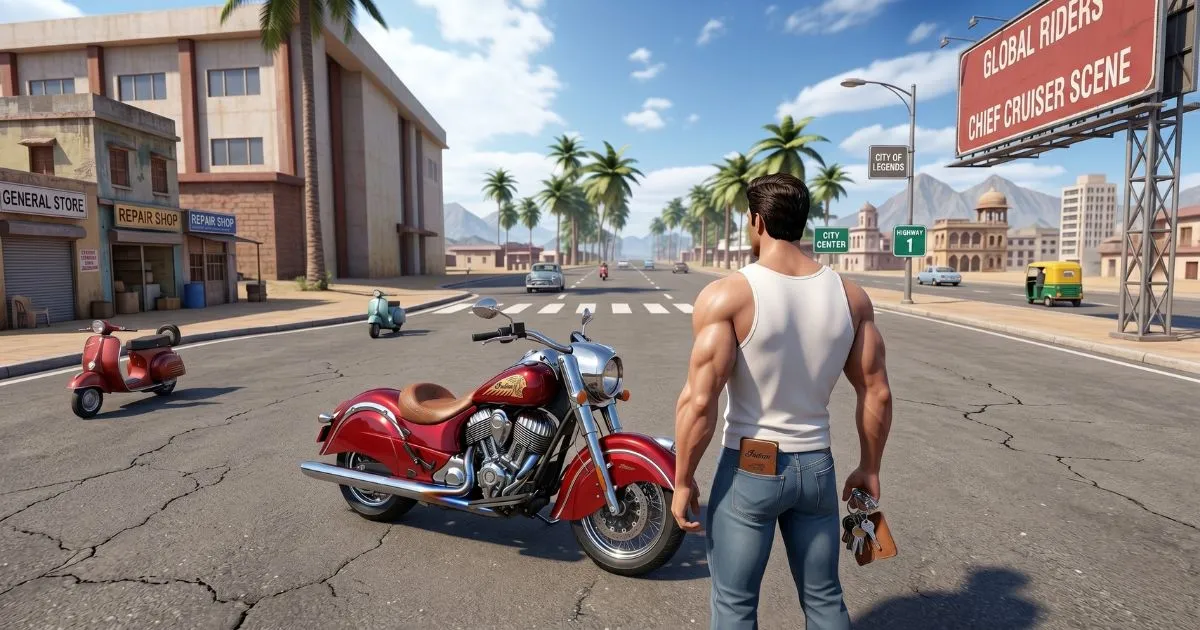
Delivery missions are one of the most common and important mission types in Indian Bike Driving 3D. They require you to pick up a package or passenger and reach a destination within a time limit — a format that tests your route knowledge, traffic management, and vehicle control simultaneously. Unlike purely racing-style missions, delivery objectives add a navigation challenge: you need to know where you are going, not just how fast you can get there. This guide breaks down delivery mission strategy from start to finish. For newer players, our beginner guide covers the basics before this guide becomes relevant.
Understanding the delivery mission format
Most delivery missions in Indian Bike Driving 3D follow this structure: you receive a waypoint showing the pickup location, you navigate to it, the package or passenger is collected, and a second waypoint shows the delivery destination. A timer runs from pickup to delivery. Fail conditions typically include running out of time, abandoning the route too far from the destination, or in some missions, taking damage beyond a threshold.
The key difference from checkpoint racing missions is that delivery missions give you a single destination rather than a series of gates to pass through in order. This means your route is your choice — the minimap shows where you need to go, but how you get there is determined by your city knowledge and real-time traffic reading. Players with strong map knowledge have a significant advantage here over players who follow the GPS line rigidly.
Step 1: Identify pickup and delivery before moving
Before you accelerate away from the start, note the pickup location on your minimap and estimate its direction and distance. Then mentally plan whether the delivery destination — shown after collection — is likely to be in the same general area or across the city. This pre-mission thirty-second check helps you commit to a general path rather than making reactive turns based purely on GPS arrows.
If you have completed missions in this area before, recall which roads are typically clear and which tend to back up. Apply that knowledge now rather than discovering it mid-run.
Step 2: Choose the right vehicle
Delivery missions in dense city areas favour agile, manageable bikes over maximum speed. The Yamaha R15 (code: 0015), KTM RC (code: 1190), or Pulsar RS200 (code: 5000) are better picks than the Kawasaki H2R for routes that involve narrow lanes and frequent turns. Reserve the fastest bikes for delivery routes that have significant open road sections between pickup and destination.
If a delivery mission does not penalise vehicle damage, activating Infinity Health (code: 9129) removes one pressure point and lets you focus entirely on navigation and timing. Use it during the learning phase on new delivery routes. For a full vehicle comparison, see our best bikes guide.
Step 3: Navigate using the minimap, not just the GPS arrow
The GPS arrow points toward your destination but does not account for traffic, road width, or which route is actually faster given current conditions. Advanced players use the minimap to plan one or two turns ahead rather than following the arrow turn-by-turn.
On a delivery route, ask yourself: is the GPS route taking me down a road that I know will be congested at this section? If yes, is there a parallel route that adds twenty seconds in distance but saves forty seconds in traffic? That calculation is where delivery mission expertise lives. The GPS is a tool for knowing where to end up, not necessarily for knowing which path to take.
Step 4: Manage your speed relative to the timer
Unlike timed racing missions where maximum speed is always valuable, delivery missions require speed calibration. Moving at full speed through a section where you cannot read the traffic ahead creates crash risk that costs far more time than a momentary speed reduction. Reduce speed entering unfamiliar sections, build speed on roads you know well, and do not sacrifice a clean run for one aggressive overtake that has a meaningful chance of failure.
Check the timer at two points during the delivery: at roughly the halfway distance, and again when you are about a quarter of the way from the destination. This gives you two calibration opportunities to decide whether to push or whether your current pace is sufficient.
Step 5: Final approach to the delivery point
As the delivery destination marker appears close on your minimap, reduce speed slightly and confirm the exact position of the delivery zone. Delivery zones in Indian Bike Driving 3D require you to enter a marked area — overshooting it at speed and needing to turn back costs significant time and, depending on traffic, can cause a collision that ends the mission.
Approach the delivery zone from the direction that allows the most direct entry. If the zone is on the left side of the road, position yourself in the left lane well before arrival. If it requires a turn off the main road, set that turn up from a distance rather than braking sharply into it at the last moment.
Common delivery mission mistakes
Following GPS into slow traffic
The GPS is calculated by destination, not by traffic conditions. When the GPS routes you down a road that has backed up, look for the next available parallel road that runs in the same direction. Two blocks off the GPS line is usually enough to clear the bottleneck.
Not noting the delivery location before pickup
When the mission starts, the delivery location is often visible on the minimap before you collect the package. Note it. Knowing where you are going after pickup means you can start planning the second leg of the journey during the first leg rather than pausing to read the map after collection.
Carrying too much speed into the delivery zone
Overshooting the delivery zone is a common late-mission mistake. Budget your deceleration for the final fifty metres. Being thirty metres past the zone and needing to reverse or turn back is always worse than arriving slightly slowly from the correct direction.
Using an oversized vehicle
Monster trucks, the Tank, and large SUVs make delivery missions significantly harder due to their size in city traffic. If a delivery route passes through narrow streets, these vehicles create unnecessary obstacles. Use them in free roam and save agile bikes for delivery efficiency.
Best bikes for delivery missions
Based on a combination of agility, top speed, and reliability through city traffic:
- Yamaha R15 (code: 0015) — Best for tight urban routes
- KTM RC (code: 1190) — Best all-round delivery bike
- Hayabusa (code: 7000) — Best for long open delivery routes
- Pulsar RS200 (code: 5000) — Best for beginner delivery players
- Duke 1290 (code: 8888) — Best for mixed urban and open routes
Frequently Asked Questions
What happens if I crash during a delivery mission?
A crash causes a delay and potentially fails the mission if damage limits are active. Activate Infinity Health (code: 9129) during learning runs to remove crash penalties and focus on route practice.
Can I use any vehicle for delivery missions?
Yes, but large vehicles like Monster Trucks or the Truck with Trailer make tight city routes very difficult. Agile bikes consistently produce the best delivery times in mixed urban conditions.
Is the GPS route always the fastest?
No. The GPS calculates by distance, not by traffic density or road quality. Players with strong city knowledge regularly beat the GPS route on congested sections.
How do I improve at delivery missions in Indian Bike Driving 3D?
Do free roam runs along common delivery routes to build map knowledge before mission pressure is involved. The more you know about each section independently, the better your in-mission decisions become.
Conclusion
Delivery missions reward two skills above all others: city knowledge and smart traffic management. The timer is less of a challenge than it appears once you stop following the GPS line blindly and start using your understanding of the city to choose faster, cleaner routes. Practice the pickup-to-delivery mental model on every mission, calibrate your speed with timer checks mid-route, and approach the delivery zone with planned deceleration rather than reactive braking. For the mission strategy that pairs most closely with delivery play, see our mission tips guide and timed missions guide. For vehicle selection, visit our full guides section.